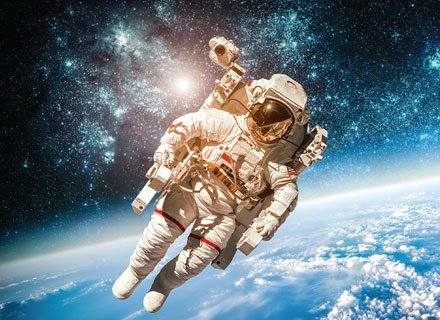
Imagine floating weightless, staring down at Earth’s blue curve against the black void of space. It’s not just a dream anymore—it’s happening. As someone who’s followed space exploration since childhood, watching grainy Apollo footage on an old TV, I’ve seen this evolve from sci-fi to reality. Today, in 2026, space tourism isn’t reserved for astronauts; it’s opening up to adventurers like you and me. This article dives deep into what space tourism means, its history, players, costs, risks, and future, blending excitement with practical insights to help you grasp this new frontier.
What is Space Tourism?
Space tourism lets everyday people—well, those with deep pockets—experience space for fun, not just science or work. It comes in suborbital hops, orbital jaunts, or even lunar dreams, offering zero-gravity thrills and mind-blowing views. Think of it as the ultimate vacation, where instead of beach selfies, you’re snapping Earth from 100 kilometers up.
From quick 10-minute suborbital flights that kiss the edge of space to multi-day orbital stays circling the planet, options vary. Suborbital means up and back down, like a super-high rollercoaster, while orbital keeps you up there, zipping around Earth every 90 minutes. And lunar? That’s the holy grail, circling the Moon like Apollo crews did decades ago.
The History of Space Tourism
It all kicked off in 2001 when Dennis Tito, an American businessman, shelled out $20 million to hitch a ride on a Russian Soyuz to the International Space Station (ISS). He wasn’t a trained cosmonaut—just a guy with a dream and a fortune. That sparked a wave: seven more tourists followed until 2009, including the first female space tourist, Anousheh Ansari in 2006.
The game changed in the 2010s with private companies. Virgin Galactic’s SpaceShipOne won the X Prize in 2004 for the first private suborbital flight, paving the way. By 2021, Inspiration4 became the first all-civilian orbital mission via SpaceX, proving space wasn’t just for governments anymore. Fast-forward to now: suborbital flights are routine, with over 100 tourists having tasted space.
Notable milestones include the 2024 Polaris Dawn, featuring the first private spacewalk, and the cancellation of the DearMoon lunar project that same year. These ups and downs show space tourism’s rapid evolution, blending triumphs with setbacks that teach us how to push further.
Key Players in the Space Tourism Industry
A handful of companies dominate this scene, each with unique offerings. Virgin Galactic focuses on suborbital joyrides from their New Mexico spaceport, Blue Origin offers similar quick trips with a focus on reusability, and SpaceX aims for orbital and beyond. They’re turning space from elite to (somewhat) accessible.
Virgin Galactic: Suborbital Thrills
Virgin Galactic’s VSS Unity spacecraft takes you to about 80 kilometers up for a few minutes of weightlessness. Tickets? Around $450,000. They’ve flown celebrities and scientists, with plans to ramp up in 2026 for more frequent launches—aiming for summer research flights and fall tourist ones.
Booking starts with a deposit; training is light, just a few days. It’s like a luxury adventure tour, complete with stunning views and that “overview effect” astronauts rave about—seeing Earth as one fragile whole. Humorously, it’s the only flight where “window seat” is guaranteed for everyone.
Blue Origin: New Shepard Adventures
Jeff Bezos’ Blue Origin uses the New Shepard rocket for suborbital flights, reaching over 100 kilometers. Costs aren’t public but hover around $500,000 per seat. They’ve carried folks like William Shatner, emphasizing safety with automated systems—no pilot needed.
Their capsule has massive windows for epic panoramas. Training? Minimal, focusing on basics. In 2025, they hit their 10th human flight; 2026 promises more, potentially including research tie-ins. It’s eco-friendlier too, using hydrogen fuel that minimizes emissions.
SpaceX: Orbital and Lunar Ambitions
Elon Musk’s SpaceX takes it further with Crew Dragon for orbital trips to the ISS or free-flying missions. Prices start at $55 million per seat for multi-day orbits. Inspiration4 in 2021 showed civilians can handle it, raising funds for charity along the way.
Starship aims for lunar flybys, though DearMoon got axed. For 2026, expect more Axiom missions to the ISS. Training is intense—months of prep—but you get real astronaut vibes, including potential spacewalks. It’s for those wanting deeper exploration.
To compare these giants:
| Company | Flight Type | Altitude | Duration | Cost (Approx.) | Unique Feature |
|---|---|---|---|---|---|
| Virgin Galactic | Suborbital | 80 km | 90 minutes | $450,000 | Air-launched from plane |
| Blue Origin | Suborbital | 100 km | 11 minutes | $500,000 | Largest capsule windows |
| SpaceX | Orbital | 300-500 km | 3-10 days | $55 million+ | ISS docking possible |
This table highlights how suborbital is quicker and cheaper, while orbital offers immersion.
How to Book a Space Flight
Dreaming of stars? Start by picking your adventure—suborbital for a taste, orbital for the full meal. Virgin Galactic and Blue Origin handle direct bookings via their sites; pay a deposit (like $150,000 for Virgin) and wait for your slot. SpaceX partners with outfits like Axiom or Space Adventures for orbital spots.
First, check eligibility: Be in good health, pass medical exams, and afford it. Training follows—days for suborbital, months for orbital. For example, Virgin’s program includes G-force simulations and team-building. Book through official channels to avoid scams; sites like virgingalactic.com have waitlists.
Navigational tip: Head to company websites or accredited agents. Transactional advice: Best “tools” are health prep apps and financial planners, but for bookings, it’s straightforward online forms. In 2026, with more flights, slots might open up—sign up for alerts now.
Costs of Space Tourism
Buckle up: space ain’t cheap. Suborbital flights run $450,000-$500,000, covering the ride, training, and swag. Orbital? $55 million per person, including extended stays and advanced prep. Lunar concepts? Hundreds of millions, though none operational yet.
Costs break down like this: Fuel and tech eat 40%, operations 30%, training 20%, and margins 10%. But prices are dropping—reusable rockets slashed launch costs 75% in a decade. By 2030, suborbital might hit $100,000.
Pros and cons of costs:
- Pros: Funds innovation, creates jobs (space economy hits $700 billion in 2026), inspires STEM.
- Cons: Excludes most people, environmental toll from emissions, opportunity cost vs. Earth issues.
Benefits of Space Tourism
Beyond bragging rights, space tourism drives progress. It funds reusable tech, making exploration cheaper—SpaceX’s Falcon 9 cut costs tenfold. Tourists conduct experiments, like health studies in microgravity, benefiting medicine back home.
Emotionally, that overview effect hits hard. Astronauts return changed, more eco-conscious. Humorously, it’s like therapy but with stars—expensive, but transformative. Economically, the market’s booming to $8.67 billion by 2030, creating thousands of jobs.
- Sparks innovation in materials and biotech.
- Boosts global interest in space, funding NASA-like programs.
- Offers unique data on human adaptation to space.
Risks and Challenges of Space Tourism
Space is unforgiving—radiation, microgravity, and launch failures pose real dangers. Fatality rate? About 3%, higher than extreme sports. Microgravity causes bone loss, nausea; radiation ups cancer risk.
Environmentally, rockets spew black carbon, harming ozone. Ethically, is it fair when billions lack basics? Launch failures, like potential explosions, add thrill but terror. Yet, companies mitigate with redundancies.
Pros and cons here flip:
- Pros: Advances safety tech for all flights.
- Cons: Health risks (e.g., space anemia), high emissions, exclusivity.
Comparison: Suborbital risks are lower (shorter exposure) vs. orbital’s prolonged hazards.
The Future of Space Tourism in 2026 and Beyond
2026 looks pivotal—Artemis II circles the Moon with humans, inspiring tourism. Commercial stations like Axiom’s open, offering week-long stays for $50 million. Prices drop: suborbital to $100,000? Orbital hotels emerge, blending tourism with manufacturing.
By 2030, lunar trips restart, Mars beckons. Challenges? Regulations, sustainability. But benefits outweigh: Humanity becomes multi-planetary, as Musk envisions. Personally, I can’t wait—maybe I’ll book a hop someday.
People Also Ask
Drawing from common Google queries, here’s quick answers:
- What is space tourism? It’s recreational travel beyond Earth’s atmosphere, from suborbital views to orbital adventures.
- How much does space tourism cost? Suborbital: $450,000+; Orbital: $55 million+; dropping over time.
- Is space tourism safe? Risks exist (3% fatality rate), but improving with tech; safer than early aviation.
- Who can go to space as a tourist? Healthy adults with funds; no prior experience needed for suborbital.
- What are the environmental impacts of space tourism? Emissions harm atmosphere, but green fuels are emerging.
FAQ
How do I prepare physically for a space flight?
Focus on cardio, strength training, and balance exercises. Companies provide medical checks; aim for good health to handle G-forces and microgravity. Consult doctors—it’s like prepping for a marathon in zero-G.
What should I pack for a space trip?
Essentials only: Personal items, meds, camera. No liquids; everything’s provided. For orbital, think comfort wear—space is casual Friday every day.
Are there age limits for space tourists?
Typically 18+, no upper limit if fit. Oldest? William Shatner at 90. Health trumps age.
How does space tourism help science?
Tourists run experiments on health, plants, materials. Data aids long-term missions to Mars.
Will space tourism become affordable for average people?
By 2040, maybe—prices could drop to $100,000 for suborbital as tech scales.
Conclusion
Space tourism marks our bold step into a new exploration era, blending adventure with innovation. From Tito’s pioneering trip to 2026’s station stays, it’s evolving fast. Sure, costs and risks loom, but the payoff—personal growth, scientific leaps, economic booms—makes it worthwhile. As I reflect on my own stargazing nights, I urge you: Dream big. Who knows? Your ticket to the stars might be next. For more on space tech, check our internal guide on reusable rockets or NASA’s site at nasa.gov.
Leave a Reply