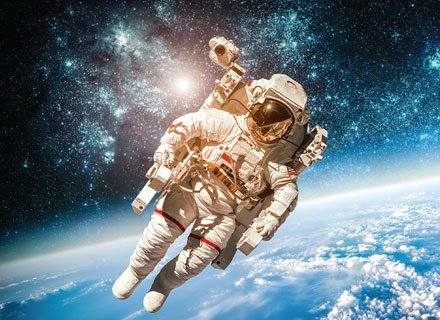
Remember that day back in 2011 when I first read about Virgin Galactic’s plans to send tourists into space? I was sitting in my cluttered home office, coffee in hand, scrolling through the news, and it hit me like a meteor—space wasn’t just for astronauts anymore. Fast forward to today, and we’re seeing billionaires like Jeff Bezos and Richard Branson turning those dreams into reality. But here’s the real kicker: what started as a thrill ride for the wealthy could revolutionize scientific research. Imagine researchers hitching a ride on these commercial flights, conducting experiments that were once locked behind massive government budgets. It’s not just about the view from up there; it’s about unlocking secrets that could change life down here on Earth. As someone who’s followed space stories for years, I’ve seen how this shift is shaking things up, and trust me, the benefits for science are out of this world.
What is Space Tourism?
Space tourism lets everyday people—well, those who can afford it—experience the cosmos firsthand. It’s divided into suborbital trips, like quick hops to the edge of space for a few minutes of weightlessness, and orbital journeys that circle Earth for days. Companies are making this possible with reusable rockets and spacecraft designed for comfort, not just survival.
Think of it as the ultimate adventure vacation, but with a side of science. Suborbital flights reach about 100 kilometers up, giving passengers a glimpse of Earth’s curvature before gliding back down. Orbital ones, like those from SpaceX, keep you up longer, offering more time to float and stare at the stars.
The Evolution of Space Travel
Space travel used to be a government monopoly, with NASA and others dominating since the 1960s. But in the early 2000s, private players entered the scene, driven by entrepreneurs who saw profit in the stars. This shift from public to commercial has accelerated innovations faster than anyone expected.
I recall watching the Ansari X Prize in 2004, where Scaled Composites won for building the first private spacecraft. That sparked a wave of investments, leading to today’s reusable tech. Now, with lower costs, space is opening up beyond elite astronauts.
How Space Tourism Boosts Research Opportunities
The rise of space tourism isn’t just flashy headlines; it’s a game-changer for researchers. By driving down launch costs through frequent flights and reusable vehicles, it makes space accessible for experiments that were once prohibitively expensive. Scientists can now piggyback on tourist missions, turning joyrides into data goldmines.
Picture this: a biologist studying how cells behave in microgravity, or a physicist testing new materials. These opportunities multiply as more flights happen, creating a virtuous cycle where tourism funds tech that benefits science.
Lowering Costs and Increasing Access
One major perk is the dramatic drop in price per seat. Traditional space missions cost billions, but commercial flights are slashing that to millions—or less in the future. This means universities and small labs can afford to send payloads or even researchers aloft.
It’s like how budget airlines democratized air travel. Researchers no longer wait years for a NASA slot; they book a spot on a Blue Origin or Virgin Galactic flight. This accessibility sparks more innovation, as diverse minds tackle space problems.
Advancing Technology for Science
Tourism pushes tech forward, like reusable rockets that cut waste and costs. These advancements trickle down to research tools, enabling longer missions and better data collection in orbit.
Take SpaceX’s Dragon capsule—built for tourists but perfect for hauling experiments to the ISS. It’s led to breakthroughs in everything from drug development to agriculture, all thanks to the commercial push.
Real-World Examples of Research Gains
From protein crystals grown in zero-g to health studies on short flights, space tourism is already yielding results. In 2024, studies showed even brief trips mimic long-term space effects on the body, helping doctors understand aging and disease back home.
I once chatted with a friend in biotech who explained how microgravity lets proteins form purer crystals, speeding up drug discovery. It’s no joke—companies like Merck have used space for this, leading to potential treatments for diseases like Alzheimer’s.
Microgravity Experiments
Microgravity removes gravity’s pull, allowing unique studies on fluids, combustion, and biology. Tourists’ flights provide short bursts of this environment, ideal for quick tests that inform longer research.
Researchers have used these to study fuel efficiency, which could lead to greener engines on Earth. It’s fascinating how a tourist’s zero-g flip can enable serious science.
Health and Biomedical Research
Space affects the human body in ways that mirror Earthly ailments, like bone loss or muscle atrophy. Tourist data from suborbital hops is revealing how even minutes in space impact health, aiding treatments for osteoporosis and more.
NASA’s studies on the ISS show accelerated aging in space, but tourism adds more subjects. This could revolutionize medicine, turning space travelers into unwitting heroes for patients worldwide.
Comparing Space Tourism Companies
| Company | Type of Flight | Key Research Benefits | Cost per Seat (Approx.) |
|---|---|---|---|
| Virgin Galactic | Suborbital | Quick microgravity tests, accessible for small experiments | $450,000 |
| Blue Origin | Suborbital | Reusable tech for frequent launches, payload options | Auction-based, ~$1M+ |
| SpaceX | Orbital | Longer durations for in-depth studies, ISS docking | $55M+ for crewed missions |
This table highlights how each player contributes differently. Virgin’s short flights suit rapid prototyping, while SpaceX enables extended research.
Pros and Cons of Space Tourism for Research
- Pros:
- Funds innovations that lower overall space costs.
- Increases flight frequency, providing more data points.
- Inspires public interest in STEM, boosting future scientists.
- Enables diverse experiments beyond government priorities.
- Cons:
- Environmental impact from rocket emissions could harm the ozone.
- High initial costs still limit access for many researchers.
- Safety risks might deter sensitive experiments.
- Potential shift from pure science to profit-driven goals.
Balancing these is key, but the pros often outweigh the cons when you consider long-term gains.
Challenges and Considerations
Despite the excitement, space tourism faces hurdles like regulatory gaps and environmental concerns. Rockets release soot that could damage the ozone layer if flights ramp up dramatically.
Sustainability is crucial—companies are exploring greener fuels, but it’s a work in progress. Plus, ensuring tourist safety without compromising research integrity adds complexity.
Ethical Questions
Who gets to go? Right now, it’s the ultra-rich, raising equity issues. But as costs drop, more researchers from varied backgrounds could participate, democratizing space science.
It’s a double-edged sword—tourism might commercialize space too much, but it also funds inclusivity in the long run.
Environmental Impact
Launches contribute to climate change, though currently minimal compared to aviation. Future growth could change that, so mitigation strategies like hybrid engines are essential.
Researchers are studying this too, ironically using space data to monitor Earth’s atmosphere.
The Future Outlook
Looking ahead, space tourism could lead to orbital hotels and lunar bases, expanding research frontiers. By 2030, the market might hit $13 billion, pouring funds into science.
I imagine a world where students design experiments for tourist flights—it’s thrilling. With companies like Axiom building private stations, the sky’s not the limit anymore.
People Also Ask
Is space tourism good or bad?
It depends on perspective. Good for innovation and research, but bad if unregulated, due to environmental risks.
What are the benefits of space tourism?
Beyond adventure, it lowers costs, advances tech, and boosts scientific discoveries like better drugs and materials.
How does space tourism work?
Passengers board specialized spacecraft for suborbital or orbital flights, experiencing weightlessness and views of Earth.
Is space tourism worth it?
For research, absolutely—it accelerates progress. For individuals, it’s a personal call on the high price tag.
What is the environmental impact of space tourism?
Rockets emit pollutants that could affect the ozone and contribute to climate change if scaled up unchecked.
FAQ
How does space tourism help scientific research?
By reducing costs and increasing access, it allows more experiments in microgravity, leading to breakthroughs in medicine and materials.
Where can researchers get involved in space tourism projects?
Look into partnerships with NASA, ESA, or companies like SpaceX via programs like the ISS National Lab. Websites like NASA’s site offer details.
What are the best tools for space research via tourism?
Reusable rockets and automated payloads are key. Tools like Bio-Monitor from CSA track health data during flights.
Can space tourism lead to medical advancements?
Yes, studies on body changes in space inform treatments for aging, cancer, and more on Earth.
What risks does space tourism pose to research?
Mainly safety and funding shifts, but regulations are evolving to protect scientific integrity.